For a time bats have been surrounded by myths. Their night time activities, looks and connection to vampire stories have made them seen as signs of darkness and bad luck. The real facts are very different. Bats are animals that can fly they are special for living in the dark. In many places they help control insects and help plants grow by spreading pollen.
The bat has long been one of the animals most misunderstood by humans. Stories about vampires, bad luck and the supposed danger of becoming tangled in someone’s hair have helped create an image that has little to do with its real behavior.
Bats are special mammals
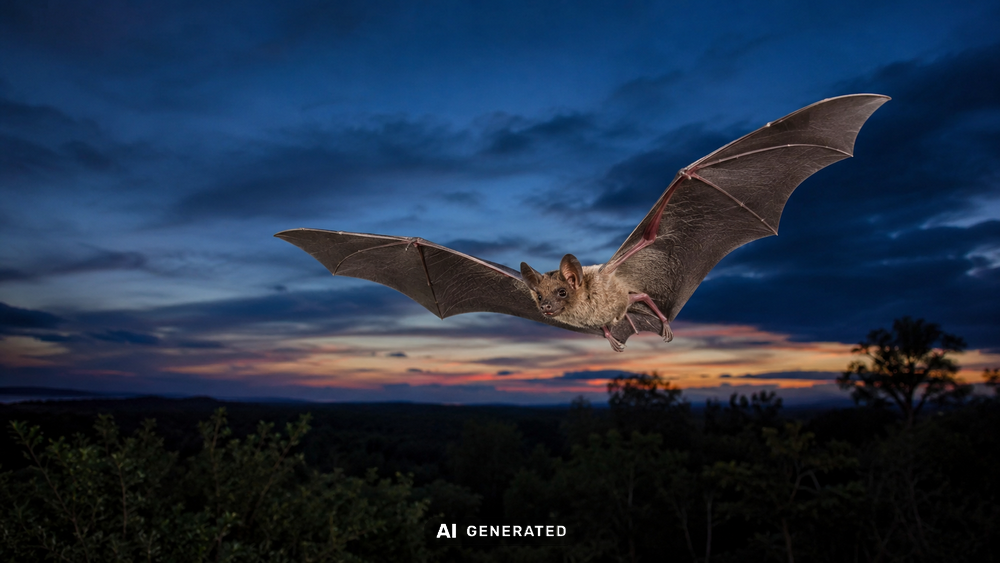
In reality, bats are a remarkably specialized group of mammals. Their ability to fly actively distinguishes them from mammals that can only glide. Their wings are formed by a membrane of skin, known as a patagium, extending across the elongated fingers of the forelimbs and connecting with the body and hind limbs.
Moreover, bats have been part of Earth’s ecosystems for tens of millions of years. They adapted to nocturnal activity, when darkness provides an environment in which their sophisticated sensory abilities can give them a major advantage.
During the day, bats can rest in caves, tree cavities and buildings. Many species hang upside down from their resting places, using their feet and claws to maintain their grip.
How bats use echolocation to navigate in darkness
Probably the most remarkable characteristic of many bats is echolocation.
Bats are not blind like people think. They have a good system to move around and find food in the dark. Furthermore, many bats make high frequency sounds, then listen to the echoes that come back when these sounds hit things around them.
As a result, this helps bats find things in their way and catch insects when it is really hard to see. In addition, Smithsonian Magazine says that bats use the sounds that come back to make a picture of what’s around them when they are flying in the dark.
People have been interested in this for a time. A scientist named Lazzaro Spallanzani did some experiments a time ago. He saw that a bat that could not see could still fly and eat. If it could not hear it had a lot of trouble finding its way and getting food.
Echolocation is not just something bats use to get. It is also something that makes them really good, at hunting at night. The USGS says that bats that eat insects use echolocation to find them before they catch them while they are flying. Bats use echolocation to make it easier to find prey. It is one of the things that makes bats really good hunters.
What do bats eat?
The food that bats eat is different for each type of bat.
Many bats mostly eat insects. In fact bats that eat insects are very important to the environment because they eat a lot of insects that fly at night.
Some bats eat different things, some eat fruit, some eat a sweet liquid called nectar and a powdery stuff called pollen from flowers. These bats help plants make seeds when they fly from one flower to another.
The USGS says that bats are important for helping plants make seeds and they help plants like agave and some kinds of cactus.
So when you ask what bats eat it is not easy to give one answer. What bats eat depends on what kind of bat they’re where they live.
Why bats matter to ecosystems
Furthermore, the ecological importance of bats goes far beyond their ability to catch insects.
They can provide several ecosystem services, including insect pest suppression, pollination and seed dispersal. The International Union for Conservation of Nature (IUCN) describes bats as important contributors to ecosystem health and highlights their roles in controlling insect pests, dispersing seeds and pollinating flowers.
The relationship between bats and agriculture is particularly interesting. In fact, by feeding on insects, bats can help reduce populations of species that damage crops. Consequently, their decline can have ecological consequences well beyond the animals themselves.
At the same time, bats are vulnerable to environmental changes. The USGS notes that habitat degradation and other anthropogenic pressures can threaten bat populations.
Vampire myth and the reality of bat diversity
The connection between bats and vampires comes from biology. It has been made much bigger than it really is by movies and stories.
Some bats drink blood. The source says that the vampire bats linked to this story live mostly in South America and eat animals like cows instead of people.
In general there are different kinds of bats. The group has species that’re very different in size, where they live and what they eat. Up-to-date scientific information says that bats are a part of the variety of mammals around the world and they live in many different places, in nature.
So thinking that all bats are dangerous because of the vampire story misses how different and special the group really is.
What To Know In Brief
- Bats are mammals capable of active flight, using a specialized skin membrane to form their wings.
- Many bats use echolocation to navigate and locate prey in darkness.
- Not all bats eat insects: depending on the species, they may consume insects, fruit, nectar, pollen or small animals.
- Bats provide important ecosystem services, including insect control, pollination and seed dispersal.
- Bats face conservation pressures, including habitat loss and other human-related environmental threats.
FAQ
No. Bats are not blind. Many species rely heavily on echolocation, using high-frequency sounds and returning echoes to navigate and locate prey in darkness.
It depends on the species. Many bats eat insects, while others consume fruit, nectar and pollen. Some species also eat small animals.
Bats can help control insect populations and, depending on the species, pollinate plants and disperse seeds. These functions make them important components of many ecosystems.
A bat emits high-frequency sounds. The sounds bounce off objects and return to the animal, providing information about the location of obstacles and prey.
Bats generally are not dangerous animals, but many negative beliefs surrounding bats are based on longstanding myths and misunderstandings.
Conclusion
Bats are interesting animals. They can do a lot of things that other animals cannot do. Bats can fly around find their way in the dark with a kind of sound and eat all sorts of food. This makes bats unique mammals.
Bats are also very important for the earth. They help keep bugs under control pollinate plants and spread seeds. All of these things help keep the environment healthy. So it is good to learn about bats. Not just think about the scary stories people tell about them. We need to understand the things, about bats that help them live in the dark.
A lot of people think about vampires when they hear about bats. Real bats are actually very cool. They are mammals that have features that help them survive. If the environment is not healthy then the bats will not be healthy either. Bats need a place to live just like we do.
Read more from nature category: Why Are Strawberries Red? The Science Behind Their Color