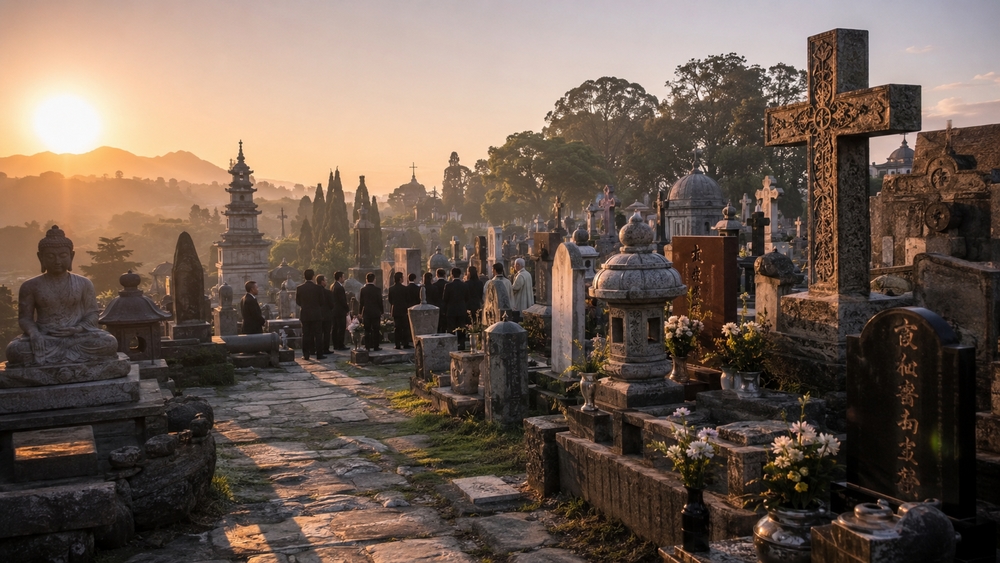
Death rituals have accompanied humanity throughout history, reflecting one of the deepest aspects of human existence: the need to cope with mortality. Across civilizations, funeral customs, symbolic gestures, and cultural traditions reveal a common attempt to give meaning to loss and reduce the fear of death. While practices differ widely, they often share the same underlying purpose, helping individuals and communities confront the unknown.
Death rituals have existed for thousands of years, shaping how societies understand grief, remembrance, and the end of life. Throughout history, cultures have developed ceremonies, symbols, and beliefs intended to make death more understandable and emotionally bearable.
Rather than viewing funeral traditions as isolated customs, anthropologists often interpret them as responses to a universal human challenge: accepting mortality.
The Universal Purpose of Death Rituals
Unlike other known species, humans are aware of their own mortality. Consequently, funeral ceremonies frequently become more than practical events—they help transform personal loss into a shared social experience.
Religious traditions and cultural practices often seek to lessen anxiety surrounding death by assigning symbolic meaning to the transition between life and whatever may follow. Therefore, rituals provide emotional structure during moments of uncertainty.
Some traditional communities adopted particularly striking responses. In certain ancient cultures, entire settlements were abandoned after a person’s death, with homes, possessions, and tools left behind because the deceased was believed to pose a spiritual danger.
For additional background on cultural approaches to death, readers may consult:
Symbolic Customs That Reflect Belief
Many funeral traditions revolve around symbolic acts rather than practical necessity.
For example, some communities position the deceased with their feet facing the doorway, symbolically preparing the final journey. Elsewhere, a coin is placed inside the coffin as a symbolic payment for passage into another realm. In other traditions, a window is opened immediately after death to allow the soul to leave the home.
Likewise, funerals themselves bring relatives and friends together, creating a collective experience of mourning that helps individuals process grief instead of facing it alone.
Different Interpretations of Death
Not every society explains death in the same way.
Among many traditional populations, deaths resulting from old age or sacrifice in battle may be viewed positively, while deaths caused by illness or suicide are sometimes interpreted differently. Rather than attributing these events to chance, some communities associate them with hostile spiritual forces, curses, or ritual influences.
As a result, funeral practices may include symbolic examinations of the deceased or ceremonies intended to identify supernatural causes.
Rituals Intended to Ease the Final Journey
Various traditions also focus on helping those approaching death.
Certain communities tie the feet of the deceased after death as a symbolic aid to the journey beyond life. Others remove protective amulets believed to prolong suffering unnecessarily.
In parts of Europe, historical accounts also describe individuals whose role was to end the suffering of dying people through what was considered a ritual act of mercy.
Even burial customs often reflect symbolic thinking. Some cultures place everyday tools, weapons, or work instruments inside graves, while others scatter sharp objects over burial sites to discourage the spirit from returning among the living.
What To Know In Brief
- Death rituals exist in nearly every human culture.
- Funeral traditions help communities cope with grief and mortality.
- Symbols such as coins, open windows, or body positioning represent beliefs about the afterlife.
- Traditional societies often distinguish between different types of death.
- Many customs seek both to honor the deceased and to protect the living.
FAQ
Why do different cultures have death rituals?
They help people process grief, explain death, and provide symbolic meaning to loss.
What is the purpose of funeral ceremonies?
Funerals transform an individual loss into a shared community experience.
Why were coins placed in coffins?
In some traditions, coins symbolically paid for passage into another world.
Why did some ancient communities abandon settlements after a death?
Certain cultures believed the deceased could become spiritually dangerous, prompting relocation.
What do burial objects symbolize?
They often represent the deceased’s life, profession, or beliefs about the journey after death.
Conclusion
Although funeral customs differ across civilizations, they reveal a remarkably consistent human response to mortality. Whether through ceremonies, symbolic objects, or shared mourning, societies have continually sought to make death more comprehensible and less frightening. Ultimately, these rituals reflect humanity’s enduring desire to find continuity, meaning, and hope in the face of life’s final transition.