Wildfires are getting worse. Happening more often in many places around the world.. Wildfires are not the same everywhere. Some forests can bounce back fast after a Wildfire. Other forests might take a time to get back to normal or they might not even be able to recover at all.
What makes a forest able to recover from a Wildfire depends on a things. It depends on the kinds of trees and plants that’re in the forest. It also depends on how healthy the soil’s if the forest gets enough water. The overall health of the forest is important too. The weather before and after a Wildfire can also make a difference in how well the forest recovers.
Scientists are trying to figure out which kinds of forests can handle the high temperatures, long periods without rain and bad Wildfires that are happening because of climate change. If we understand which forests are better at handling these things we can help the forests that’re in the most danger. We can also make plans to take care of the forests and protect the places that are most vulnerable. This can help reduce the effects, on the environment and help the forests get better in a world where the climate is changing. Wildfires and climate change are problems and we need to understand how they affect forests.
Some Trees Are Naturally Resistant to Fire
Some forests have lived with wildfires for thousands of years. Over time, many plants developed natural ways to survive fire. Thick bark, deep roots, and leaves that hold more moisture can help protect them from extreme heat.
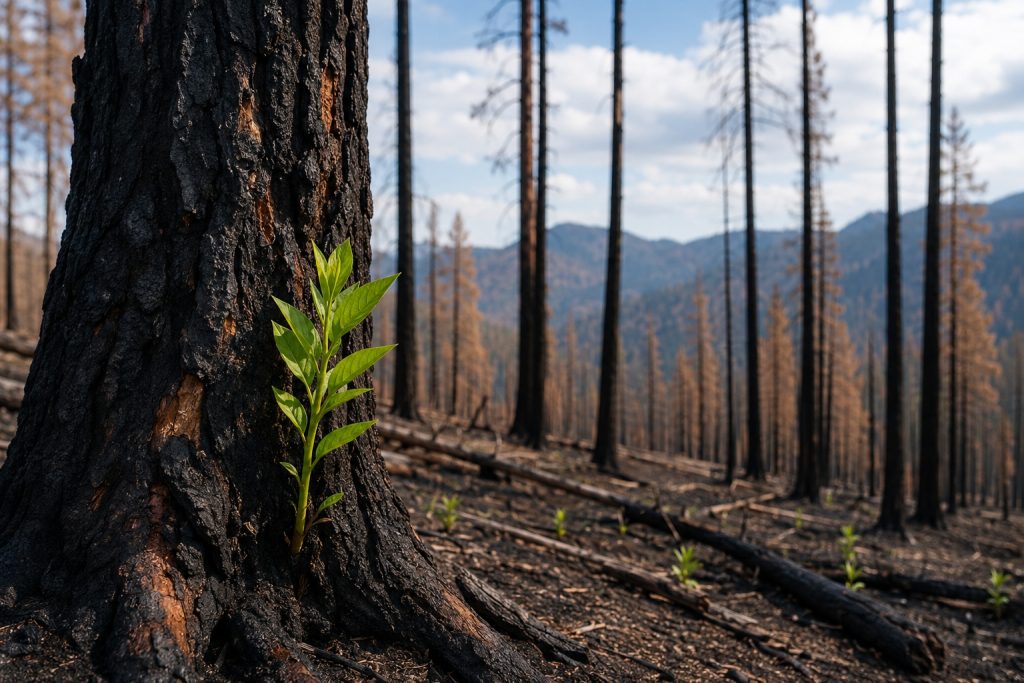
Some trees can even grow again after a fire. Their seeds only open when they are exposed to high temperatures, allowing new plants to grow soon after a wildfire. Other trees can produce new shoots from roots that survive underground.
These natural features make forests more resistant to wildfires and help them recover more quickly after large fires.
Ecosystem Diversity Improves Recovery
Forests with many different plant species often resist fires better than ecosystems dominated by a single type of vegetation. Biodiversity creates natural barriers that slow down flames and reduce fire intensity.
Wet areas, shrubs, mosses, and smaller plants can also help maintain soil moisture. This limits the spread of fire during hot and dry seasons.
Researchers increasingly view ecosystem diversity as one of the strongest protections against severe wildfire damage.
Higher Temperatures Create Extreme Conditions
Climate change is making forests more vulnerable worldwide. Rising temperatures dry out vegetation and reduce water availability in many regions.
Longer drought periods create ideal conditions for fast-moving fires. Even forests that historically resisted fires are now under pressure because heat waves are becoming more intense and more frequent.
In many parts of the world, wildfire seasons now last longer than in previous decades. Dry forests can ignite more easily, and strong winds can spread flames across large areas within hours.
Some Forests May Change Permanently
When fires become too frequent, forests may not have enough time to recover. Young trees can die before reaching maturity, reducing long-term regeneration.
In extreme cases, forests can transform into grasslands or shrublands after repeated fires. This process changes local biodiversity, water cycles, and soil stability.
Scientists warn that climate change could push some ecosystems beyond their natural recovery limits. Once that threshold is crossed, returning to the original forest structure becomes difficult.
Read more: Nasa – Wildfires and Climate Change
New Models Help Predict Ecosystem Survival
Researchers are developing advanced models to understand how forests react to wildfires. These systems analyze vegetation, climate patterns, rainfall, soil conditions, and fire history.
The goal is to identify which forests are more resilient and which ecosystems face the highest risk of long-term collapse.
These predictive models may help improve land management strategies and wildfire prevention policies in the future.
A good prediction is important because it can support:
- wildfire prevention plans;
- ecosystem restoration projects;
- biodiversity protection;
- water resource management;
- climate adaptation strategies.
Accurate data may also help local communities prepare for extreme wildfire seasons.
Prevention Is Becoming More Important
Experts increasingly believe that prevention is as important as emergency response. Healthy ecosystems are generally more resistant to severe fires.
Controlled burns, vegetation management, and forest monitoring are some methods used to reduce wildfire intensity. Restoring damaged ecosystems can also improve long-term forest fire resilience.
However, scientists stress that reducing global emissions remains critical to slowing the environmental conditions that fuel extreme wildfires.
What To Know In Brief
- Some forests naturally resist fires better than others.
- Certain plants can regenerate after wildfires.
- Biodiversity helps reduce fire intensity.
- Climate change is increasing drought and wildfire risk.
- Scientists are developing models to predict ecosystem resilience.
FAQ
Forest fire resilience is the ability of a forest ecosystem to survive, recover, and regenerate after a wildfire.
Some forests contain plant species naturally adapted to fire, including trees with thick bark or heat-activated seeds.
Higher temperatures and longer droughts dry out vegetation, making wildfires more frequent and more intense.
Some forests recover naturally, but repeated fires can permanently damage ecosystems and reduce biodiversity.
Different plant species help slow fires, retain moisture, and improve ecosystem stability after wildfires.
Conclusion
Forest fire resilience is becoming a critical environmental issue as climate change intensifies wildfire activity across the planet. Some ecosystems still possess natural defenses that allow them to recover after fires, but rising temperatures and longer droughts are testing those limits. Scientific research is helping experts understand which forests are most vulnerable and how ecosystems may evolve in the future. Protecting biodiversity and improving prevention strategies could play a key role in reducing long-term environmental damage in the coming decades.
Read more from environment category: Oceans Under Pressure: Climate Change and Pollution