Clean drinking water is something many people take for granted. However, before it reaches homes, it undergoes a carefully designed treatment process to remove dirt, harmful substances, and germs. Likewise, wastewater must also be cleaned before it is returned to rivers or the sea. Understanding how water is cleaned helps explain why modern water treatment systems play a vital role in protecting both public health and the environment.
Water used for drinking can come from lakes, rivers, underground sources, or, in some areas, from the sea after the salt has been removed. Before it becomes safe to drink, it passes through several treatment stages designed to eliminate impurities and improve water quality.
For a broader introduction to drinking water safety, readers can consult the World Health Organization’s overview on drinking water:
https://www.who.int/news-room/fact-sheets/detail/drinking-water
Water Treatment Process Step by Step
The treatment process begins with screening, where large grids remove leaves, branches, plastic, and other large debris from the incoming water.
Next, a special substance is added to help tiny particles stick together. As these particles become larger, they are much easier to remove during the following stages.
Afterward, heavier materials settle at the bottom of large tanks. The water is then left undisturbed so that even smaller particles can sink, while accumulated sludge is removed mechanically.
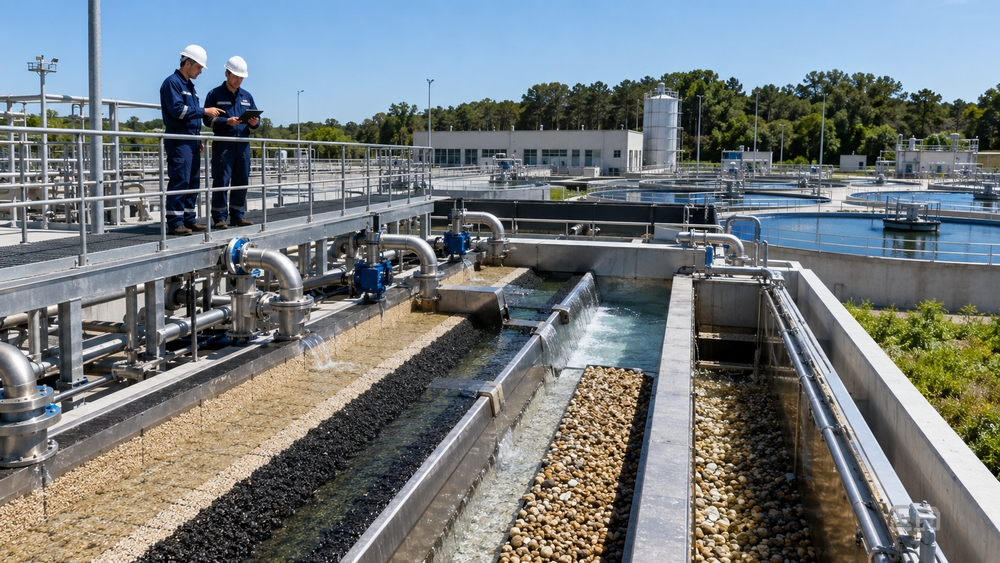
Filtration follows, with the water passing through layers of charcoal, sand, and gravel. These materials capture the remaining fine particles that earlier stages could not remove.
Finally, a small amount of chlorine is added to destroy germs, making the water safe for drinking. Once treated, the clean water is stored in large reservoirs and pumped through distribution pipes to homes.
How Wastewater Is Cleaned
Cleaning wastewater is equally important because used water cannot be returned directly to the environment.
The process starts by removing large solid waste, oils, and foam. Next, the collected sludge is separated from the water and dried to reduce its volume.
One of the most important stages uses beneficial bacteria. Air is added to large tanks, allowing these microorganisms to consume the remaining pollutants naturally. After a final filtration and, if necessary, disinfection, the treated water can safely return to rivers or the sea.
For additional educational information on wastewater treatment:
Britannica – Wastewater treatment
Unicef – Water, sanitation and hygiene
Fluoride and Hard Water
Some treatment facilities add a small quantity of fluoride to help protect teeth from cavities. However, excessive fluoride may damage tooth enamel and change its color.
The source material also explains hard water, which contains high levels of calcium and magnesium. As a result, soap produces less foam when used with this type of water.
Finally, despite modern treatment technologies, it looks like that around 844 million people worldwide still do not have access to safe drinking water every day.
What To Know In Brief
- Drinking water can come from rivers, lakes, groundwater, or desalinated seawater.
- Water treatment includes screening, particle removal, settling, filtration, disinfection, and distribution.
- Wastewater is cleaned before being released back into the environment.
- Some facilities add fluoride in small amounts, while hard water naturally contains more calcium and magnesium.
- Millions of people around the world still lack access to safe drinking water.
Conclusion
Water treatment is a carefully structured process that protects both human health and the environment. From removing large debris to eliminating microscopic germs, every stage contributes to making water suitable for daily use. At the same time, wastewater treatment helps reduce pollution before water returns to nature, highlighting the importance of effective water management systems.